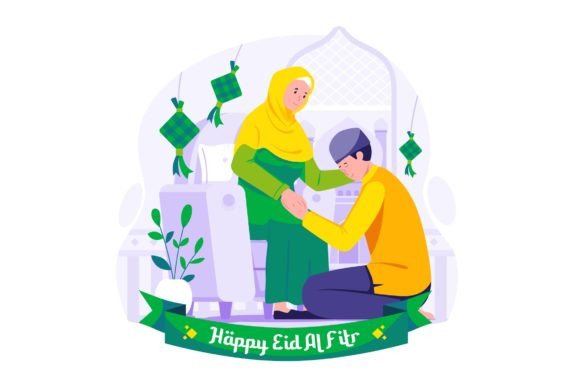
Muslims Forgive Each Other Illustration
The Muslims Forgive Each Other Illustration immediately catches the eye with its warm, heartfelt message and culturally rich visual language. It’s a design that feels both personal and universal, making it ideal for embroidery projects that aim to connect on an emotional level. The illustration centers around a Muslim man apologizing to his mother, capturing the spirit of Eid al-Fitr and the tradition of forgiveness that defines this sacred time of year.
First Impressions: A Design That Speaks Volumes
From the first glance, the Muslims Forgive Each Other Illustration exudes a sense of sincerity and reverence. The flat style is clean and modern, which makes it versatile for a range of applications. The layout is well-balanced, with the main subject clearly defined and the supporting elements—like the traditional clothing and setting—adding cultural depth without overwhelming the composition.
The detail level is appropriate for an embroidery file. It’s not overly complex, which means it should translate well into machine embroidery without requiring excessive stitch density or complicated stitching techniques. The visual personality of the design is gentle and respectful, fitting perfectly for products that aim to convey kindness, tradition, and family values.
Real-World Embroidery Use Cases
This design would work exceptionally well in custom apparel, such as sweatshirts, t-shirts, and tote bags. Imagine a small business owner creating a limited-edition collection for Ramadan or Eid, featuring this illustration on organic cotton tote bags. The design would stand out as a meaningful, handmade product that resonates with customers looking for authentic, culturally relevant items.
It also has potential in baby items, like onesies or blankets, where the message of forgiveness and family can be introduced early. For crafters and Etsy sellers, the Muslims Forgive Each Other Illustration could be used in embroidered patches, aprons, or pillow covers. These are all practical, everyday items that can carry a deeper message through the power of embroidery.
In holiday gift-giving, the design could serve as a unique, personalized item. A handmade embroidered tea towel or kitchen towel with this illustration would make a thoughtful, culturally inspired gift for friends or family during the Eid season.
Considerations for Embroidery Success
While the Muslims Forgive Each Other Illustration is visually appealing, there are some practical considerations when using it in real embroidery projects. The design’s simplicity is a strength, but it also means that small details may be lost on certain fabrics or in tight hoop sizes. If you're working with a smaller hoop, you might need to adjust the design or split it into sections for better results.
Textured or stretchy fabrics can also affect how the design looks once stitched. Thin or dark fabrics may require additional stabilizer to ensure the embroidery sits properly and doesn’t pucker. For commercial embroidery projects, it's important to test the design on different fabric types before committing to large batches.
For those planning to sell finished products, especially as an Etsy seller or small shop owner, always check the licensing terms. Even though the design appears to be a vector illustration in flat style, the rights to use it commercially may vary depending on the source. Confirming this before selling is crucial to avoid any legal issues.
Design Notes for Embroidery Professionals
As a designer, my first step with the Muslims Forgive Each Other Illustration would be to test it on scrap fabric. This allows me to see how the stitch density works and whether the design translates well in different thread colors. I’d also compare it against both light and dark fabric backgrounds to ensure visibility and contrast.
If the design includes any lettering or decorative elements, I’d inspect those closely. Tiny text or intricate details may need to be adjusted for clarity. For example, if the phrase “Ramadan Kareem” or “Eid Mubarak” is part of the design, I’d want to make sure it’s legible at the intended size.
Using the right stabilizer is key, especially for delicate or stretchy fabrics. A good quality cutaway or tearaway stabilizer will help maintain the integrity of the embroidery and prevent distortion. I’d also recommend checking the stitch count and file format to ensure compatibility with your embroidery machine.
When to Use With Caution
The Muslims Forgive Each Other Illustration is best suited for flat, smooth surfaces. It may not work as well on curved areas like caps or on garments with layered seams. If the design includes dense stitch areas, such as fill stitches or satin stitches, it’s important to balance them with running stitches to avoid puckering or stiffness.
For small hoop sizes, consider breaking the design into parts. This ensures that each section is stitched accurately and maintains the overall quality of the finished product. If you’re working with a thin or dark fabric, you might also need to adjust the thread color to ensure the design stands out clearly.
Why This Design Matters
Embroidery is more than just a craft—it’s a way to tell stories, express values, and create meaningful connections. The Muslims Forgive Each Other Illustration does exactly that. It’s a design that can elevate a handmade product, add emotional value to a personalized gift, and enhance the appeal of a small business offering.
For creative entrepreneurs and crafters, this illustration offers a chance to engage with a specific audience in a respectful and thoughtful way. Whether it’s used in a boutique product, a printable mockup, or a digital embroidery file, the design carries a message that resonates beyond just aesthetics.
Ultimately, the Muslims Forgive Each Other Illustration is a valuable addition to any embroidery project that aims to celebrate culture, family, and tradition. With proper care and consideration, it can become a standout piece that brings joy and meaning to both the creator and the end user.